GA/T 644-2006: The Standard Behind a Real Guard Tour System
GA/T 644-2006 is the Chinese public-security industry standard that defines what an electronic guard tour system must do. This guide explains what it covers, why it protects the buyer, and how to check that a reader you are about to buy actually meets it.
GA/T 644-2006 is the Chinese public-security industry standard that defines what an electronic guard tour (patrol) system must be able to do. If you buy guard tour hardware for a site that answers to a security specification, this is the document your supplier is measured against. This guide explains, in plain terms, what the standard covers, why it protects the buyer, and how to check that a reader you are about to purchase actually meets it.
What GA/T 644-2006 is
The full title is Electronic Patrol System (电子巡查系统). It is a public-security industry standard of the People's Republic of China, numbered GA/T 644-2006, issued by the Ministry of Public Security and first published in 2006. It is the reference most Chinese-made guard tour products are built and tested to, and it is widely cited in tenders and security specifications across Asia, the Middle East and Africa.
What the standard asks a system to prove
- Classification - how patrol systems are grouped by type and reading method.
- Functional requirements - the system must record a checkpoint identity together with the time it was read.
- Performance - the reader must read reliably under real field conditions, not just on a bench.
- Environmental adaptability - the hardware must keep working in heat, cold, dust and moisture.
- Reliability and data integrity - records must survive drops, years of storage, and must not be silently edited.
- Testing and marking - the product must be testable and clearly labelled.
Why the standard protects the buyer
A specification on paper is easy to write and hard to verify. GA/T 644-2006 matters because it turns vague marketing into testable claims: a reader is not rugged because a brochure says so, it is rugged because it passes a defined drop, temperature and sealing test. When you ask a supplier for the test report behind a claim, you are using the standard as a buyer's tool.
What a compliant device must deliver
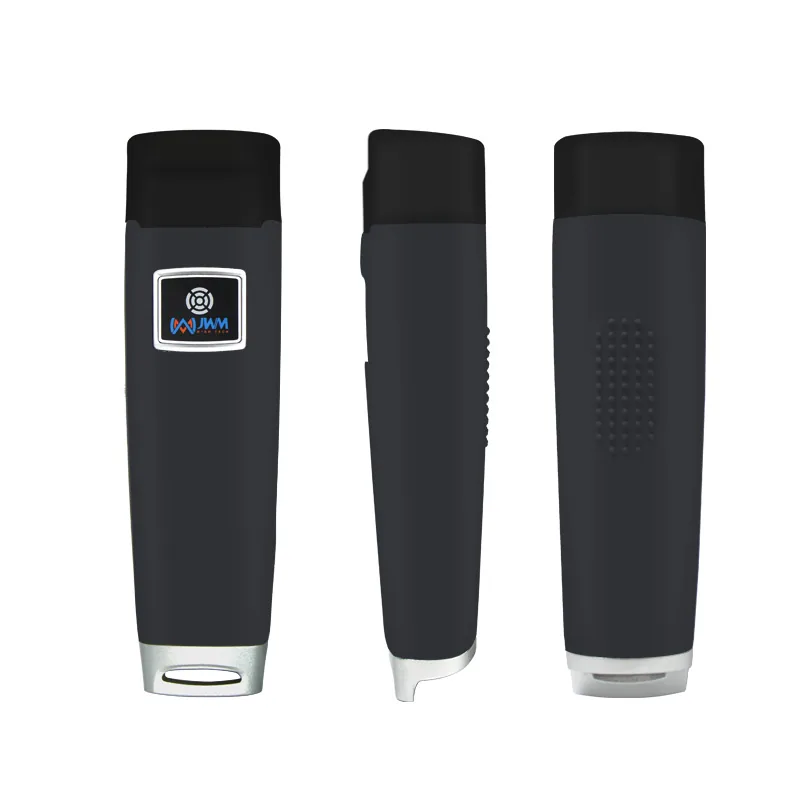
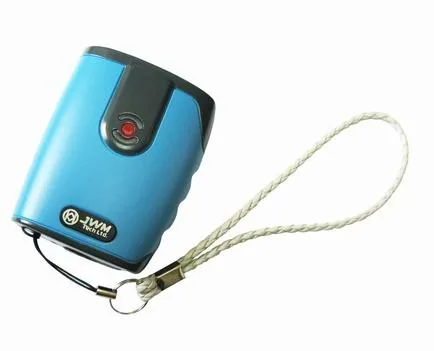
| Requirement area | What the standard expects | How JWM readers are built |
|---|---|---|
| Reading | Record the checkpoint identity and the time of contact | Contact iButton (1-Wire) or 125 kHz RFID; each read stores serial plus timestamp |
| Performance | Reliable reads under field use, not only in a lab | Tens of thousands of records stored; consistent reads in rain, cold and dust |
| Environment | Work in heat, cold, dust and moisture | IP67 sealed housing; operating range -40 to +85 °C |
| Reliability | Survive drops and long storage | Shockproof shell; patrol data retained for over 20 years |
| Data integrity | Records not editable after the fact | Read-only storage; tamper-resistant sealed body |
The device parameters the standard points to
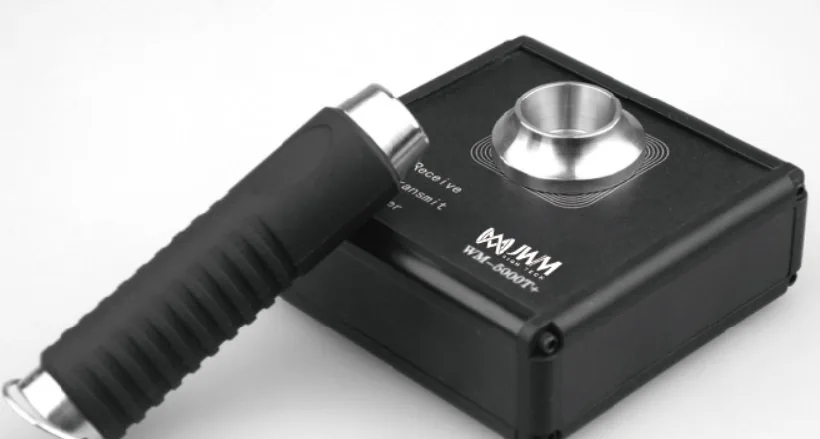
- Reading method - contact (iButton 1-Wire) for explosive or high-interference sites, or RFID for fast walk-by reads.
- Record capacity - enough for many rounds between downloads; JWM readers store 60,000 records.
- Operating temperature - a real outdoor or freezer rating, not a number borrowed from the chip.
- Ingress protection - IP67 means dust-tight and brief immersion, not just splash proof.
- Data retention - patrol records must survive years on the device, not just until the next charge.
How to verify a supplier really meets it
- Ask for the test report, not just the certificate line on a brochure.
- Check the environmental rating against your worst site: freezer, boiler room, coastal salt air.
- Confirm record capacity in writing and how records are offloaded.
- Ask how the body resists tampering and whether stored data can be altered.
- Prefer a supplier that names the standard on the spec sheet over one that only claims to meet all standards.
Claims that do not hold up
Watch for phrases that sound compliant but prove nothing. Meets international standards with no report, an IP rating quoted without the test, a huge capacity number with no model name, or a cloud-only system that cannot tell you who holds your patrol data. None of these survive a request for the underlying test.
A buyer checklist
- Standard named on the spec sheet: GA/T 644-2006 or an equivalent you can verify.
- Test report available for the environmental and drop claims.
- Reading method matches your site (contact for hazardous, RFID for speed).
- Record capacity and data retention stated in numbers.
- Clear answer on who stores and can export your patrol data.
Frequently asked questions
What does GA/T 644-2006 stand for? It is the standard number of the Chinese public-security industry standard for electronic patrol systems. GA/T means a recommended public-security industry standard; 644 is the serial number and 2006 the year of publication.
Does it apply outside China? The standard is Chinese, but the requirements it sets - reliable reading, environmental toughness, data integrity - are what any buyer anywhere should ask for. Many tenders in Asia, the Middle East and Africa reference it directly.
Is an IP67 rating enough by itself? No. IP67 proves sealing against dust and water, but it says nothing about drop survival, temperature range or data integrity. Treat it as one line in a full specification, not the whole story.