WM-5000V+ RFID Guard Tour Reader: Specs, Body and Read Speed
The WM-5000V+ is a contactless RFID guard tour reader with a 60,000-record memory, a 2 m drop rating, a 100 kgf crush rating and an IP67 sealed body. This page reads the datasheet line by line, explains what each number means on a live route, and states where the V+ is the wrong choice.
The WM-5000V+ is a contactless RFID guard tour reader: the guard sweeps it past a checkpoint button and keeps walking, and the reader stores which checkpoint was read and when. It is the model we build for sites with long indoor routes, where stopping to touch every point is exactly what makes a guard skip one. This page reads the datasheet line by line, explains what each number means on a live route, and is honest about where the V+ is the wrong choice.
What the WM-5000V+ is
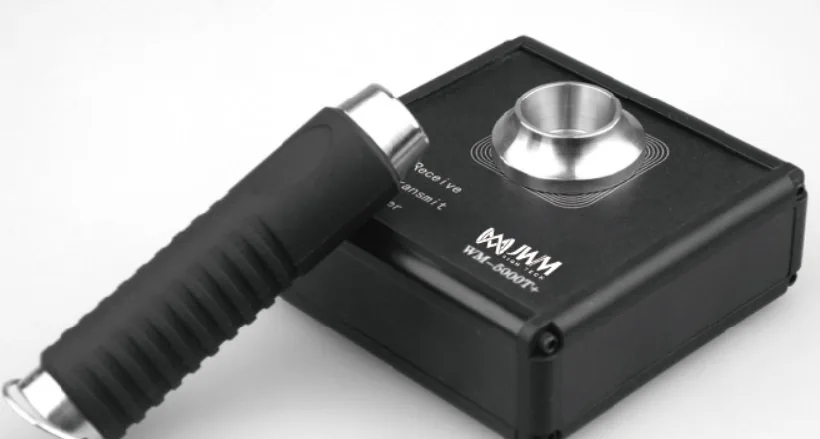
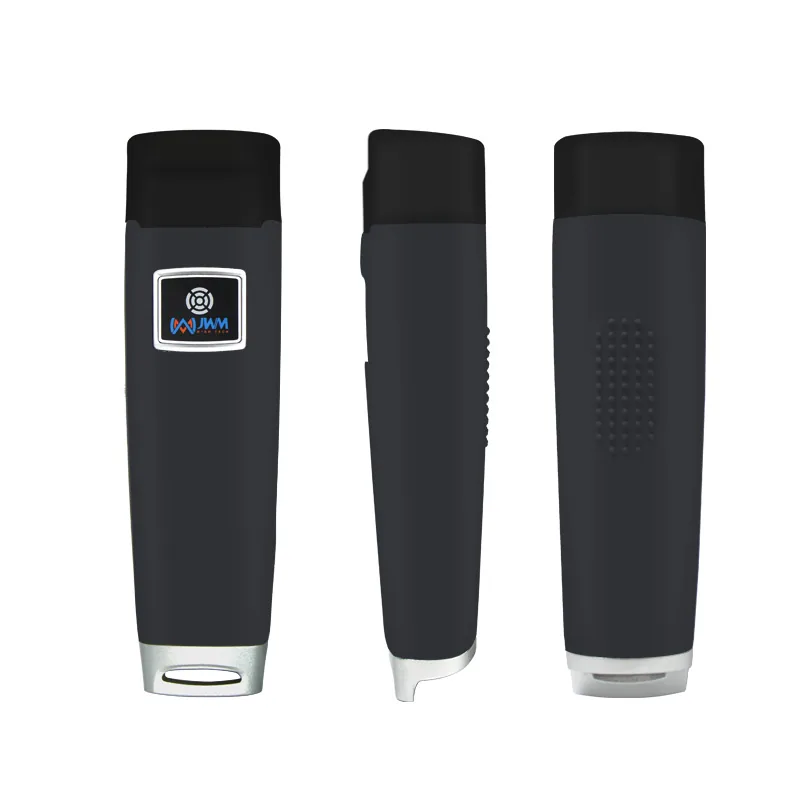
A handheld RFID guard tour reader with a rubber jacket moulded over a metal core. It senses EM-type checkpoint buttons as it comes close - no contact, no key to press - stores 60,000 records, and offloads them over the WM-CABLE USB cable to the Guard tour management System. There is no screen and no keypad: the job of this model is to record, not to compute.
Where it fits, and where it does not
- Long indoor routes: warehouses, hospitals, shopping centres, office towers, campus buildings.
- A first patrol system, where the priority is that staff actually keep using it.
- Sites where the guard carries the reader in a pocket or on a lanyard for a whole shift.
- Not for explosive atmospheres or very high radio interference: use a contact iButton reader such as the WM-5000E there.
- Not where you need on-screen time, temperature or a flashlight: that is the WM-5000V4 class.
The datasheet, number by number
| Parameter | WM-5000V+ | What it means on a live route |
|---|---|---|
| Reading method | Contactless RFID (EM) | Sweep past the checkpoint button; no contact, no key press |
| Read time | 0.1 s or less | A guard walking at normal pace does not have to stop |
| Memory | 60,000 records | Months of rounds between downloads at typical route lengths |
| Data retention | 20+ years | Records stay on the device long after the battery is flat |
| Operating temperature | -40 C to +85 C | Freezer rooms through to plant rooms and rooftops |
| Humidity | 10% to 90% | Humid basement plant areas and dry stores alike |
| Drop rating | 2 m onto concrete | Waist-height drops off a belt clip are survivable |
| Crush rating | 100 kgf | A trolley wheel or a stacked pallet does not end it |
| Protection | Sealed, waterproof, dust-proof | Rain, wash-down splash and dust stay out of the electronics |
| Size and weight | 107 x 21 mm, 135 g | Fits a uniform pocket; light enough to carry all shift |
| Power | 3.0 V | Low-power design; an audible prompt confirms every read |
How the body is built
The shell is a rubber jacket over a metal core. The rubber takes the impact and gives grip in a wet hand; the metal core stops the housing from flexing, which is what usually cracks a sealed body over a few years. Inside, the board carries over-voltage, over-current, lightning and static protection - because the failures that actually kill readers in the field are surges and static, not rain.
What 100 kgf actually means
It is a static crush figure: roughly an adult standing on the reader, or a loaded pallet trolley crossing it. It does not make the reader indestructible - a hammer blow will still break anything. What it does mean is that the ordinary accidents of a night shift, dropping it, standing on it, running a cart over it, are not the reason you buy a replacement.
Why 0.1 s changes guard behaviour
Guards rarely skip a checkpoint out of pure laziness. On a long route, stopping at every point costs minutes, and the last points of the round are the ones that get cut. When a read takes a tenth of a second and needs no aiming, there is nothing to gain by cutting the corner. Read speed is not a comfort feature here - it is what makes the record complete.
What is in the box
- 1 x WM-5000V+ RFID guard tour reader
- 1 x WM-CABLE USB transmit cable
- RFID checkpoint buttons for the route
- RFID guard Keys, one per officer
- Guard tour management System software
Getting the data out
Records leave the reader over the WM-CABLE USB cable into the Guard tour management System on a PC. From there they are filtered by route, officer and date, and exported for a client or an auditor. There is no SIM card, no subscription and no server in the middle: the reader holds the record until you decide to download it.
Limits worth knowing before you buy
- RFID reads depend on the tag: only EM-type checkpoint buttons read reliably at this frequency.
- A tag mounted flat on thick steel can read short; use the anti-magnet checkpoint or a spacer.
- No display means no on-device review - you need a PC and the software to see records.
- For explosive or high-interference areas the contact iButton reader remains the correct choice.
Frequently asked questions
Does the WM-5000V+ need a button press? No. It senses the checkpoint button as it comes close, and the audible prompt confirms the read, so the guard knows it registered without looking.
How often should I download? With 60,000 records of memory, most routes can run for months between downloads. Weekly is still the better habit, because the data is in the report before a client asks for it.
Can I mix it with contact readers on one site? Yes - both feed the same Guard tour management System. Keep one technology per route, so a guard is not switching habits halfway through a shift.