iButton vs RFID Guard Tour Readers: How the Two Reading Technologies Work
A guard tour reader does one job: read a fixed ID from each checkpoint. The two reading technologies inside patrol readers are contact (iButton / 1-Wire) and contactless (RFID). This guide explains how each works as a physical product, what the checkpoint tags are made of, and which JWM readers use which.
Every electronic guard tour system is built around one simple action: a handheld reader recognises a fixed ID at a fixed point. The difference between systems comes down to how that reading happens. There are two reading technologies used in patrol readers — contact (iButton, also called Touch Memory) and contactless (RFID). This article looks at both as physical products: how the reader and the checkpoint tag are built, how the ID is read, and which JWM WM-5000 readers use each one.
Two technologies, two ways to read a checkpoint
Both technologies answer the same question — was the guard at this exact point at this time — but they do it in different ways. The table below compares them across the things that matter when you specify a reader.
| Contact (iButton) | RFID (inductive) | |
|---|---|---|
| Reading method | Reader touches the button | Reader is waved near the tag |
| Checkpoint tag | iButton DS1990A-F5 (1-Wire) | 125 kHz / 13.56 MHz RFID tag |
| Reading distance | 0 mm (physical contact) | 3 to 10 cm |
| Radio frequency energy | None | Emits an RF field |
| ID tamper resistance | Factory-fixed, cannot be changed | Fixed, but RF can be relayed |
| Intrinsic safety | Safe in hazardous zones | Not for explosive atmospheres |
| Typical reading speed | One touch per point | Fast, no aiming needed |
How an iButton (contact) reader works
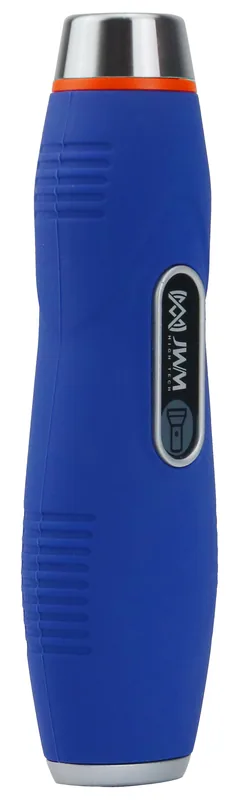
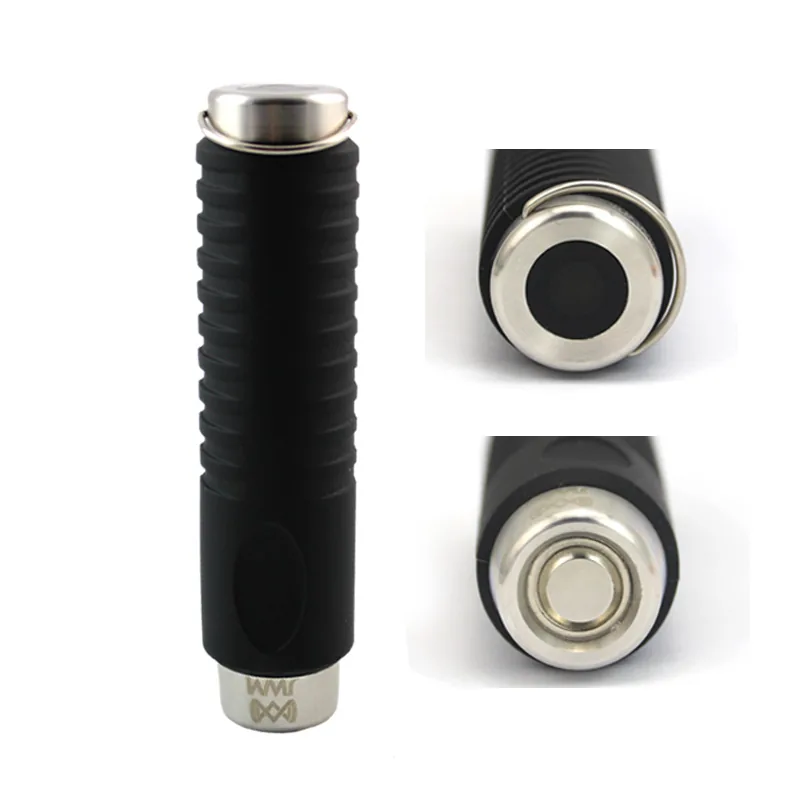
The reader carries a small stainless-steel contact tip. The checkpoint is a button — the DS1990A-F5 — that holds a silicon chip with a globally unique, read-only 64-bit ROM ID. It uses the Maxim 1-Wire protocol, where a single wire carries both power and data. The guard touches the tip to the button; the reader reads the UID in a fraction of a second. The button needs no battery and emits no radio energy.
Because there is no RF energy, contact reading is intrinsically safe — which is why iButton readers are the only choice for oil, gas, chemical and other hazardous sites (see our guide to guard tour systems for hazardous areas). The ROM ID is fixed at the factory and cannot be rewritten, so a checkpoint button cannot be copied or forged.
How an RFID (contactless) reader works
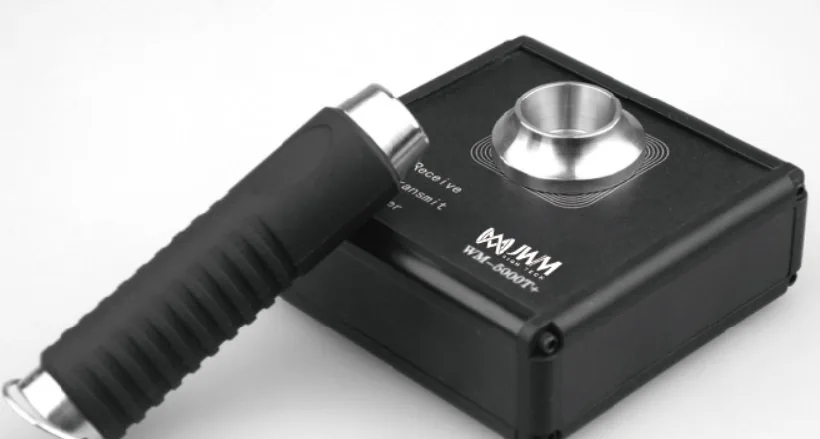
The reader emits a low-frequency (125 kHz) or high-frequency (13.56 MHz) radio field. The checkpoint is a passive RFID tag — a chip and antenna sealed in a label or a disk. When the reader comes within a few centimetres, the field powers the tag and reads its ID. No touching is required, so a guard can read many points quickly without stopping to aim.
The trade-off is the radio field itself. In classified hazardous (explosive) zones a reader must not emit RF energy, so contact iButton is required there. For ordinary indoor and outdoor patrol, RFID is convenient and fast.
Which JWM WM-5000 readers use which technology
| JWM model | Reading technology | Type |
|---|---|---|
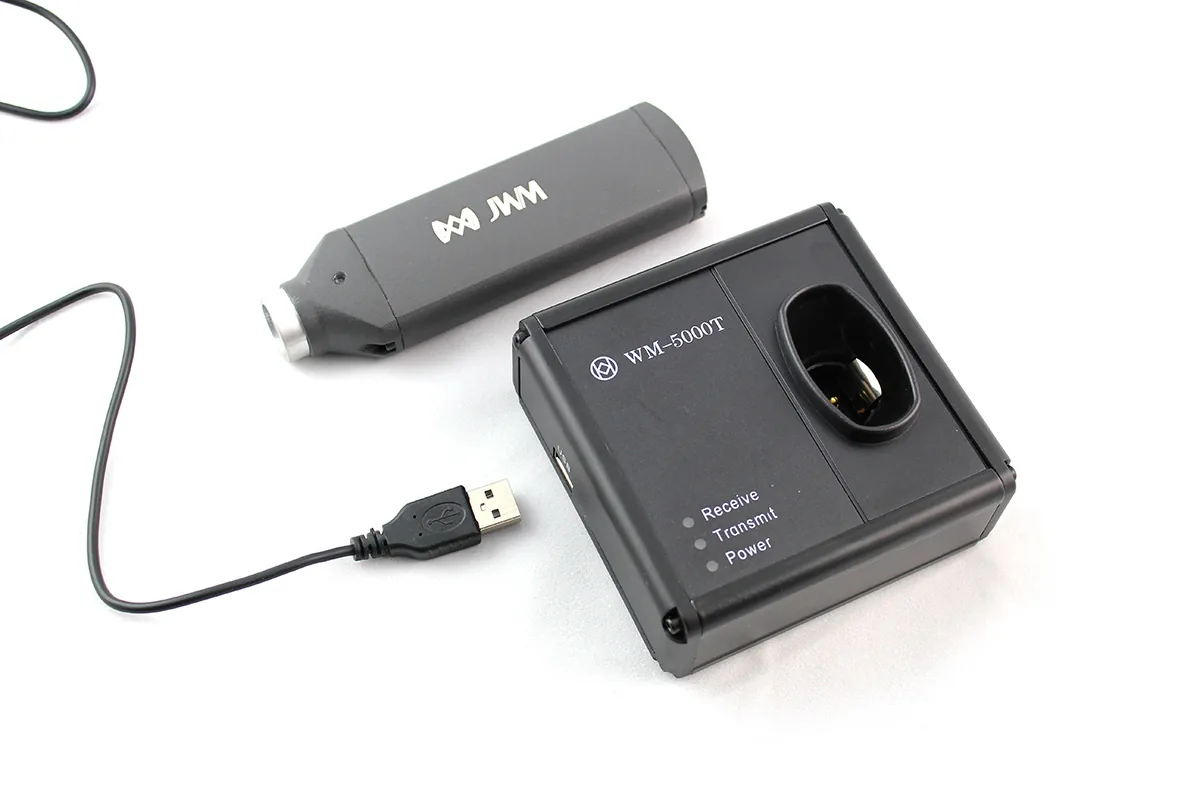
| WM-5000E / WM-5000ES / WM-5000A / WM-5000D(+) | iButton (contact) | Rugged / standard contact readers |
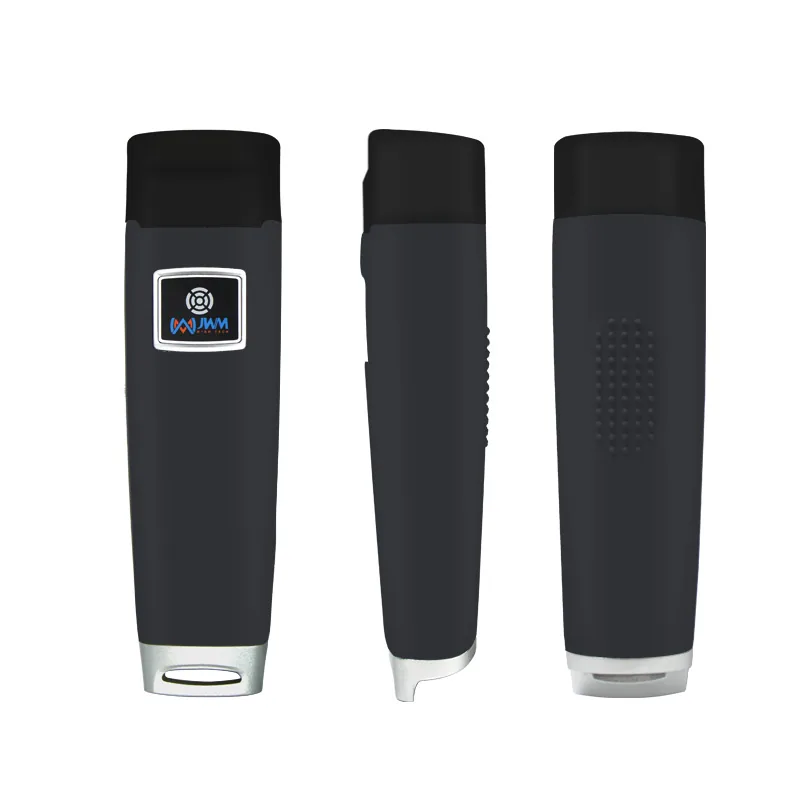
| WM-5000V+ / WM-5000V4 / WM-5000V4S / WM-5000V5 / WM-5000V8 / WM-5000S / WM-5000V6 | RFID (inductive) | Rugged / photo / long-range RFID readers |
How to choose between contact and RFID
- Hazardous or explosive sites (fuel, gas, chemicals) — choose contact iButton for intrinsic safety and zero RF energy.
- Long routes with many checkpoints, where you want speed — choose RFID contactless reading.
- You need a checkpoint ID that cannot be copied or forged — choose iButton, whose ROM ID is fixed at the factory.
- Dirty, dusty or wet surfaces where a tag may be covered — contact still reads because the tip touches through grime; RFID can be blocked by metal or liquid.
- Standard indoor or outdoor patrol with no hazardous materials — either technology works; pick by reading speed and habit.
Frequently asked questions
Q: Can I mix iButton and RFID at one site? A: Generally no — a reader reads one technology. Choose one per route or site. JWM keeps both product lines so you can pick the right one for each location.
Q: Is RFID less reliable than contact? A: In normal environments RFID is very reliable and fast. Its limits are interference from metal or liquid and prohibitions in hazardous zones — not everyday reliability.
Q: Which lasts longer, the button or the tag? A: Both are sealed solid-state devices. iButton buttons are rated for millions of touches and years outdoors in their IP67 housing; RFID tags are similarly sealed and durable.