WM-5000V4S Review: A Flashlight RFID Guard Tour Reader Built for Night Patrols
A hands-on look at the WM-5000V4S: the published 125 kHz RFID and IP67 specifications, why a built-in flashlight changes an unlit route, how the magnetic gold-plated USB contact works, what a complete kit contains, and where this compact reader is not the right choice.
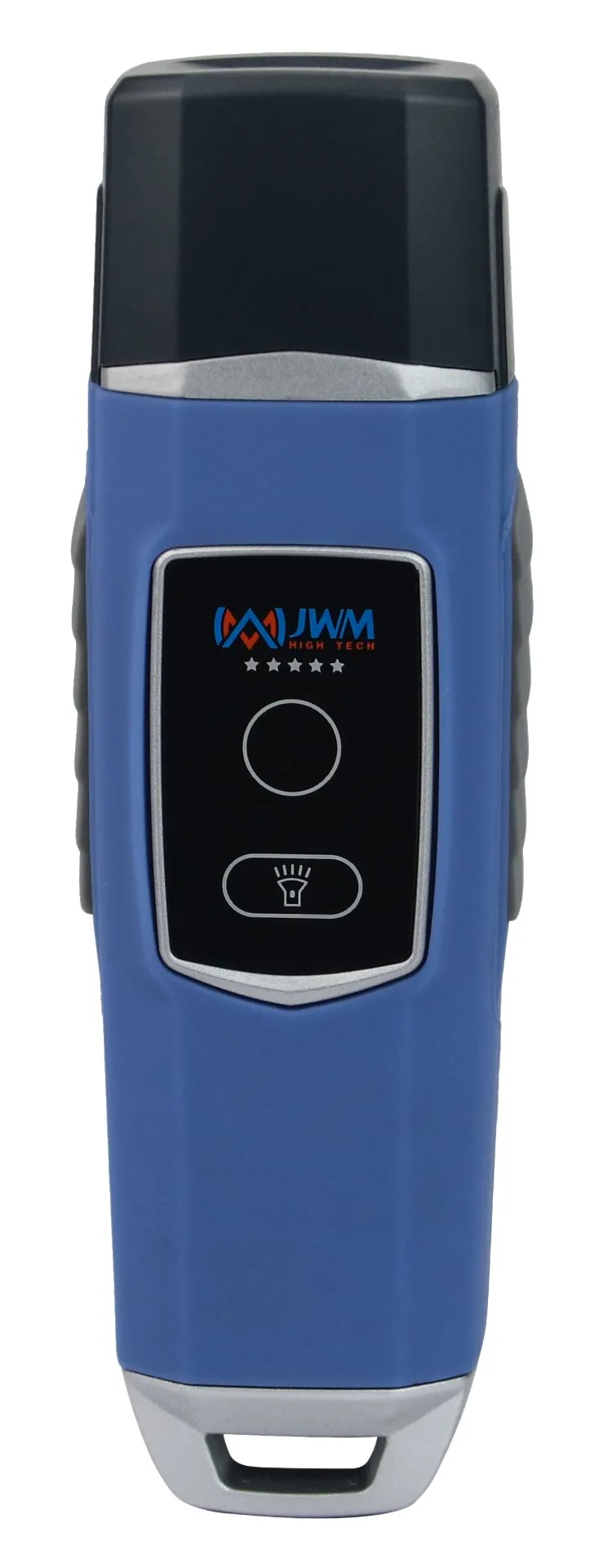
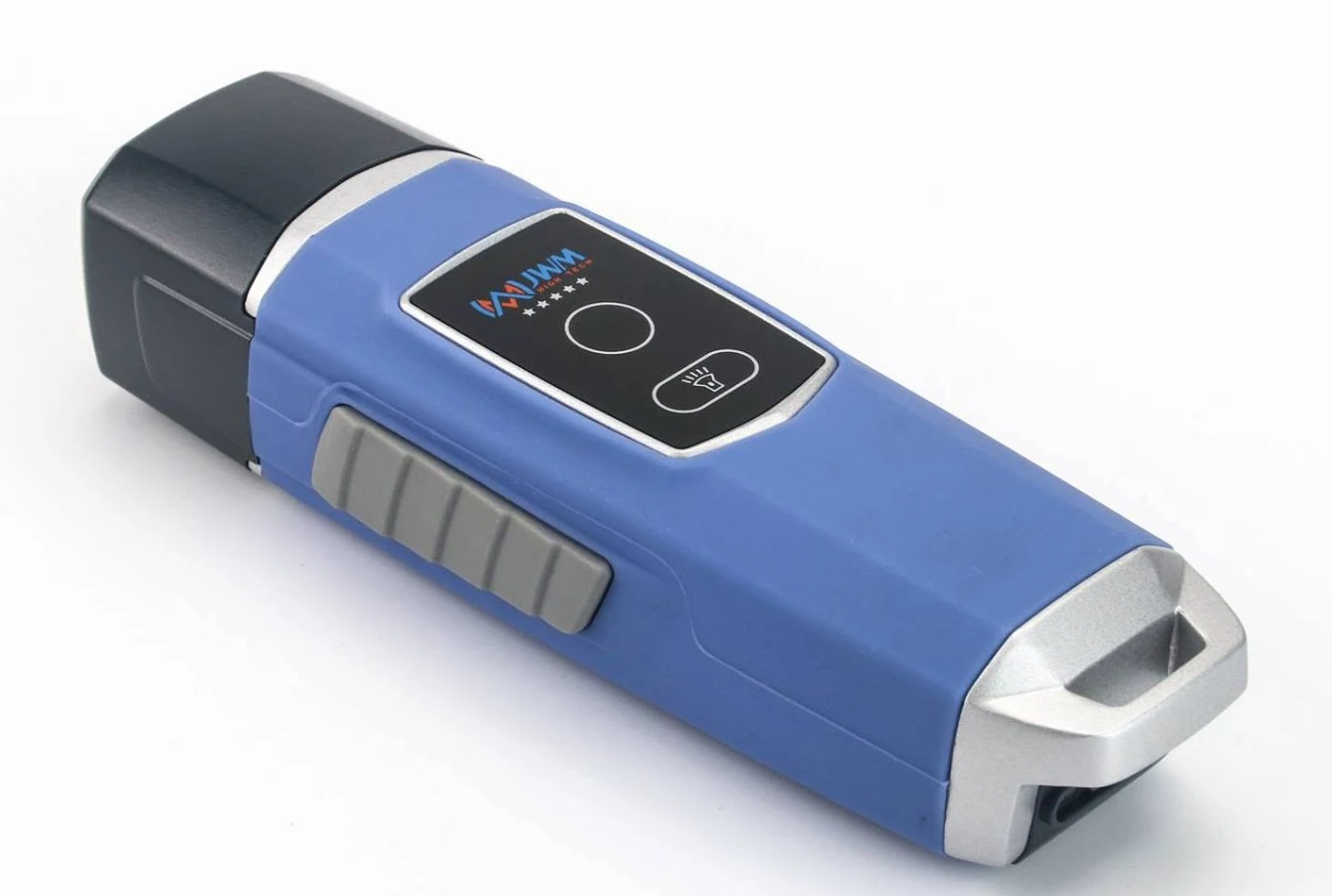
The WM-5000V4S is a compact 125 kHz RFID guard tour reader with a built-in LED flashlight, an IP67 sealed housing and a magnetic gold-plated USB contact cable. This guide walks through the published specifications, what four hardware details mean on a real night patrol, how a complete kit is put together, and where this model is — and is not — the right fit.
What the WM-5000V4S actually is
It is an offline patrol reader. A guard carries it along a route and reads the checkpoint buttons fixed at each location; every read is stored in the reader with a time stamp. Later, the reader is connected to the PC running the Guard tour management System through the magnetic USB cable, and the route report is built from those records. No network is needed at the checkpoint, which is why this design is common on campuses, in plants, in hotels and in car parks.
- 125 kHz RFID auto-sensing — no button press and no physical contact with the checkpoint button.
- IP67 sealed housing, published as fully waterproof and dustproof.
- Built-in LED flashlight for unlit stairwells, yards and plant rooms.
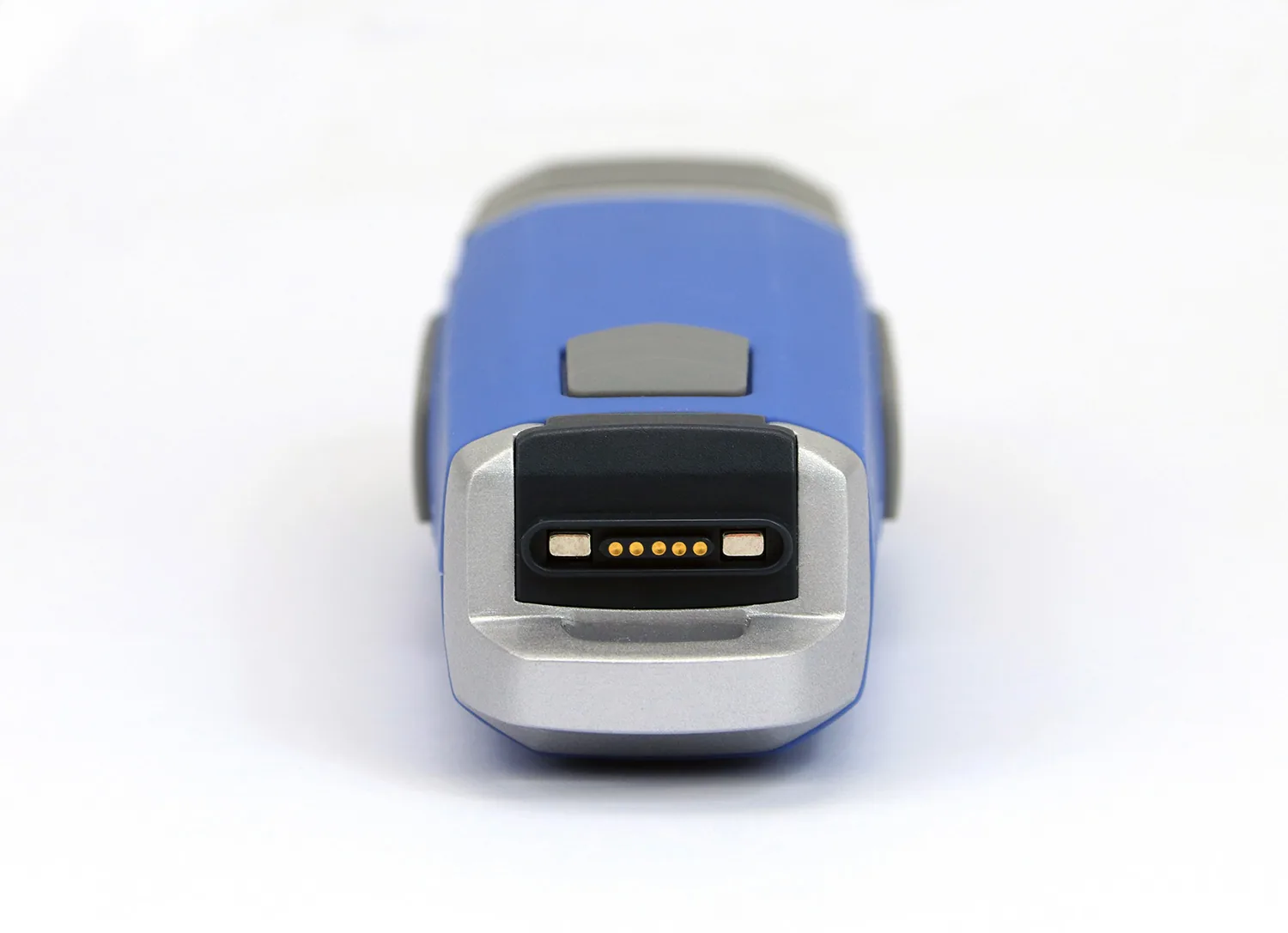
- Magnetic gold-plated contact USB transmit cable — no open port and no rubber flap.
- Vibration feedback, a polymer lithium-ion battery and about 26 days of battery life.
Published specifications
The table below lists only values the factory publishes for this model. Where a figure has not been published, we say so rather than filling the gap — ask us if you need it in writing for a tender.
| Item | Published value | What it means on site |
|---|---|---|
| Reading technology | 125 kHz RFID, auto-sensing | Hold the head near the checkpoint button; no contact, no trigger to press. |
| Sealing | IP67 | Dust-tight and protected against temporary immersion. |
| Operating temperature | -40°C to +85°C | Unheated winter yards through to hot plant rooms. |
| Battery | Polymer lithium-ion, about 26 days | Roughly one charge a month on a normal patrol pattern. |
| Flashlight | Built-in LED | One-handed use on deliberately unlit routes. |
| Data and charging | Magnetic gold-plated contact USB cable | No socket cover to tear off or leave open. |
Drop height, compressive load, record capacity and warranty period are not published for the WM-5000V4S. We do not carry figures over from other WM-5000 models: if a tender needs a number, request the current term in writing before quoting it.
Why a built-in flashlight changes a night patrol
An unlit corner is the easiest checkpoint to skip. A guard who cannot see the stairwell, the meter cabinet or the tag behind a door frame will naturally walk around it, and the record will simply show a gap. Putting the light inside the reader means it is already in the one hand the guard is using, so the route gets walked rather than guessed.
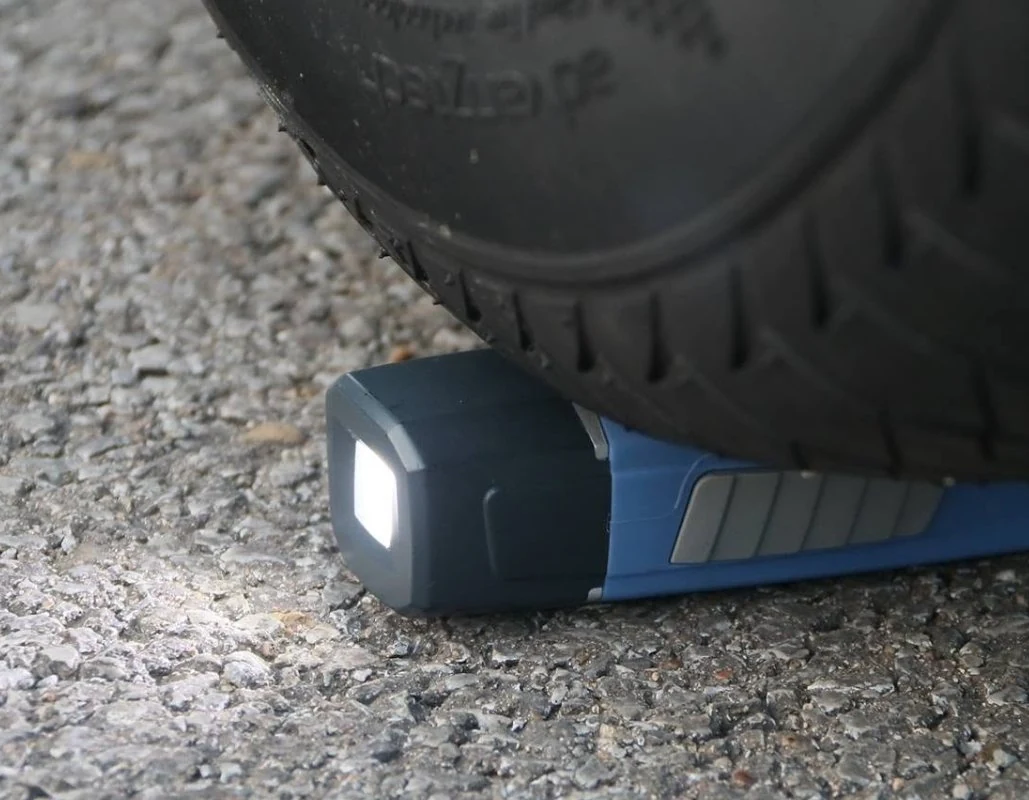
The photo above is a workshop demonstration: the reader sits under a vehicle tyre with the flashlight on. It shows how the sealed body and rubber grip are built, but it is not a rated compressive-load test and no crush rating is published for this model. Treat it as a build-quality illustration, not a specification.
Water, dust and the IP67 seal
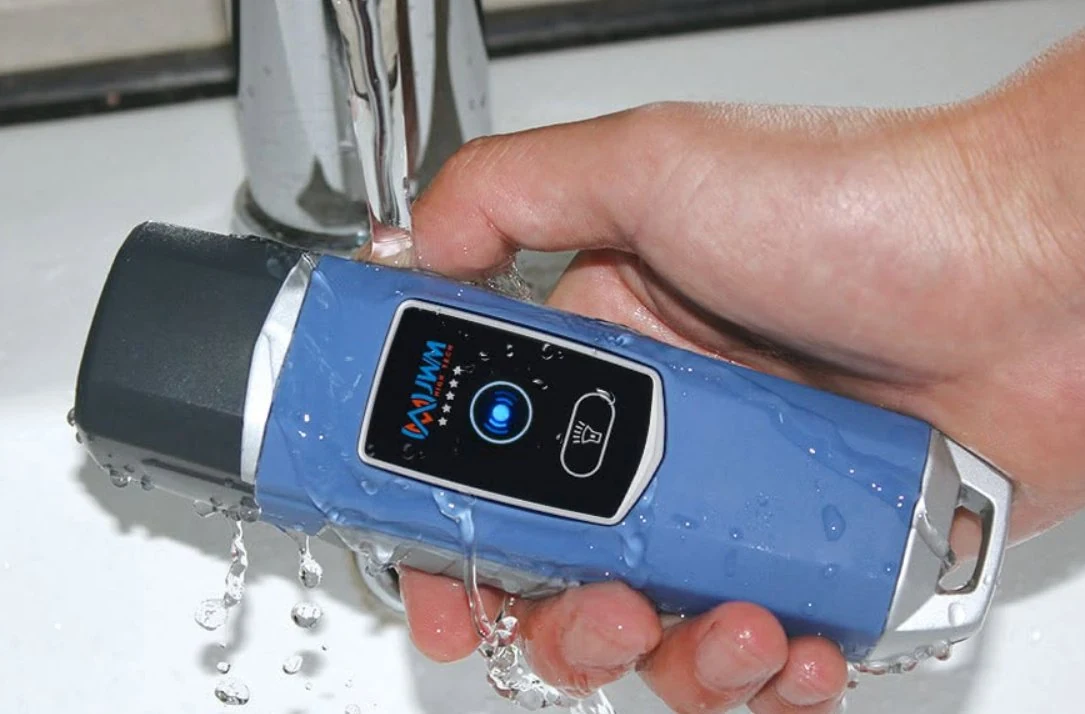
IP67 means the housing is dust-tight and sealed against temporary immersion. A short rinse under a tap to wash off mud or grit is fine; dry the unit fully afterwards. What breaks a seal is pressure and heat rather than water itself: no pressure washer, no dishwasher, and no soaking the unit just to test the rating.
- Rinse briefly, then wipe dry before docking the cable.
- Keep the gold-plated contacts clean and free of grit.
- Never open the housing — the seal is not user-serviceable.
The magnetic contact: no port, no flap
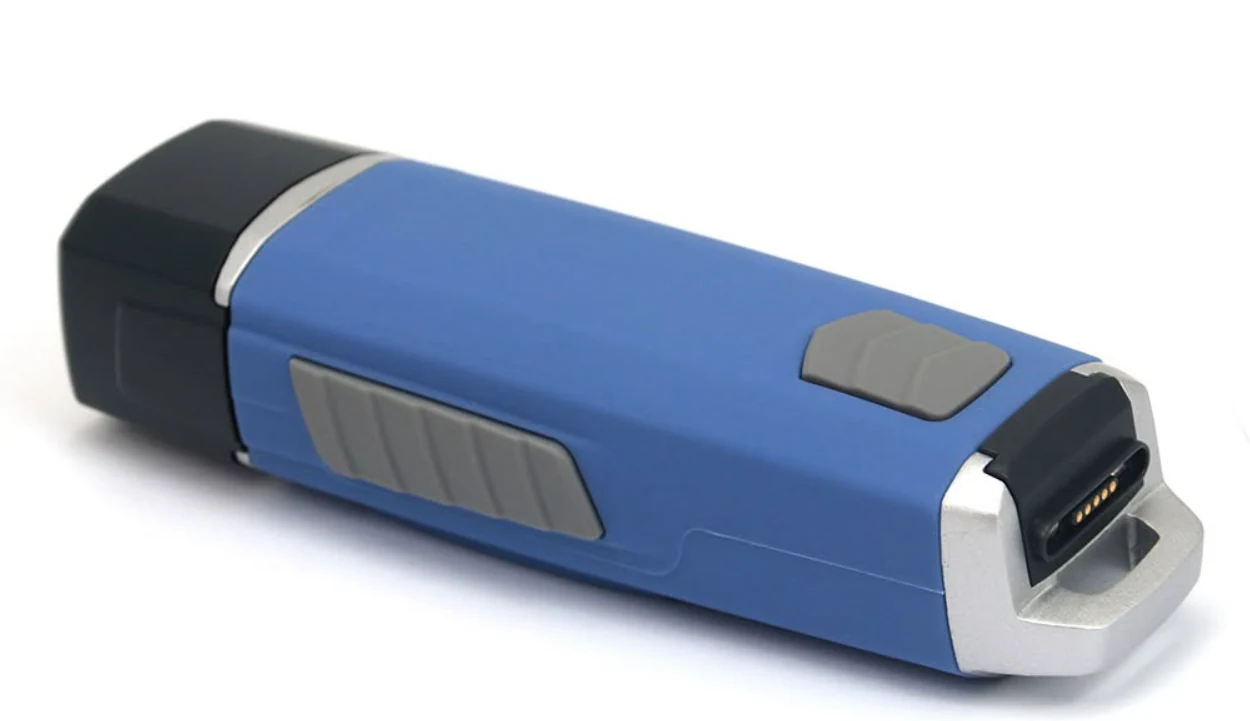
Instead of a USB socket behind a rubber cover, the WM-5000V4S uses exposed gold-plated contacts and a magnetic cable that snaps into place for charging and data transfer. There is no flap to tear off, no cap for a guard to leave open, and no open cavity for water or dust to enter. On a device handled by a different person every shift, that single design choice removes one of the most common failure points.
The same cable is the download path. Connect the reader to the PC running the Guard tour management System, transfer the stored reads, and the patrol report is produced from those time-stamped records. Nothing has to be configured at the checkpoint itself.
What comes in a working kit
| Part | Model or note | Quantity logic |
|---|---|---|
| Reader | WM-5000V4S | One per guard or per shift |
| USB transmit cable | Magnetic, gold-plated contacts | One per reader |
| Checkpoint buttons | WM-30A/EM, 125 kHz RFID | One per location on the route |
| guard Keys | WM-226/EM | One per guard, for identity |
| Management software | Guard tour management System | One installation |
| Event wallet | IW08RF | Optional |
Checkpoint buttons and guard Keys are passive 125 kHz tags: no battery and no wiring. That is what keeps a large route cheap to extend — adding a location is one tag and one screw, not a cable run.
Where the WM-5000V4S fits — and where it does not
| Situation | Good fit? | Why |
|---|---|---|
| Night patrol on a campus, property or plant | Yes | Flashlight plus quiet, one-handed RFID reading |
| Rain, wash-down areas, dusty yards | Yes | IP67 sealed housing with no open port |
| High guard turnover, minimal training | Yes | Auto-sensing; no button sequence to learn |
| Live or real-time patrol tracking | No | This is an offline reader; data arrives on download |
| Photo or video evidence required | No | No camera on this model; use a dedicated evidence reader |
A five-step buying check
- 1. Count the checkpoints on each route — that sets the WM-30A/EM quantity, not the number of readers.
- 2. Count the guards who need their own guard Key (WM-226/EM).
- 3. Confirm the 125 kHz checkpoint buttons you already have match this reader before ordering replacements.
- 4. Decide where the download PC sits and who runs the weekly transfer.
- 5. Request the current warranty and lead time in writing — these are commercial terms, not datasheet values.
Frequently asked questions
Does the WM-5000V4S need a network at each checkpoint? No. It is an offline reader: each read is stored locally and transferred later through the magnetic USB cable.
Can it read the checkpoint buttons I already have? It reads 125 kHz RFID tags such as the WM-30A/EM. Tags on a different frequency will not be read, so check the tag type before ordering.
How long does one charge last? About 26 days is published for this model. Actual life depends on how often the flashlight is used.
Can I open the case to replace the flashlight or battery? No user-serviceable parts are inside, and opening the housing breaks the IP67 seal. Keep the body closed.