Guard Tour Systems for Hospitals and Healthcare Facilities
Hospital patrol is judged after the fact, by an inspector, an insurer or an accreditation surveyor. How an electronic guard tour system turns ward, pharmacy and plant-room rounds into a record that cannot be rewritten — and how to choose between contact and RFID reading for clinical areas.
A hospital never really closes. Wards run through the night, plant rooms run all year, and at any hour a fire door can be propped open, a store room left unlocked or a corridor blocked with equipment. Security patrol is the only process that physically confirms those conditions, yet in many hospitals it is still recorded on a paper sheet that nobody can audit afterwards. This guide explains how an electronic guard tour system turns hospital patrol into a defensible record, and how to plan rounds across patient areas, restricted zones and back-of-house plant.
Why hospital patrol is different from site patrol
In a factory, a missed round is a management problem. In a hospital it can become a clinical and legal one. Four areas carry most of the risk:
- Life safety: fire doors held open, escape routes blocked by beds and trolleys, extinguishers moved or discharged. These are found by walking, not by watching a screen;
- Restricted and high-value areas: pharmacy and controlled-drug stores, medical gas manifolds, oxygen cylinder stores, IT and patient-record rooms;
- Plant and infrastructure: medical air and vacuum plant, boilers, chillers, UPS rooms, electrical risers and roof-level equipment;
- People at risk: lone staff in basements, car parks and outbuildings, and patients who may wander into service corridors at night.
Each of these is a checkpoint: a physical place a person must stand in front of, at a known time, and confirm. That is precisely what a guard tour system records.
Why paper logs fail accreditation and insurance reviews
Accreditation bodies, fire inspectors and insurers all ask the same question: show me that the round was done, at the required frequency, by the person on duty. A paper sheet can show a tick. It cannot show that the tick was made at that checkpoint rather than at the desk at the end of the shift. Handwriting, back-filled times and lost sheets are the three findings that turn a routine inspection into a corrective action plan.
An electronic system records the scan itself: reader, checkpoint and exact time, and, when personnel buttons are issued, the individual holding the reader. The record is created at the point of contact rather than reconstructed afterwards.
What a defensible patrol record should contain
| The question an auditor asks | What the system records |
|---|---|
| Was the round done? | One scan per checkpoint, with date and exact time |
| Was it done at the right interval? | The gap between consecutive checkpoints, by route |
| Who did it? | Personnel button (Guard Key) assigned to the reader |
| What was found? | Event codes and notes attached to the checkpoint scan |
| Can the record be edited? | Records are stored as read; timestamps cannot be back-dated |
Contact or RFID: choosing the reading method
Hospitals usually compare two reading methods, and the decision is driven more by cleaning routine and checkpoint location than by price.
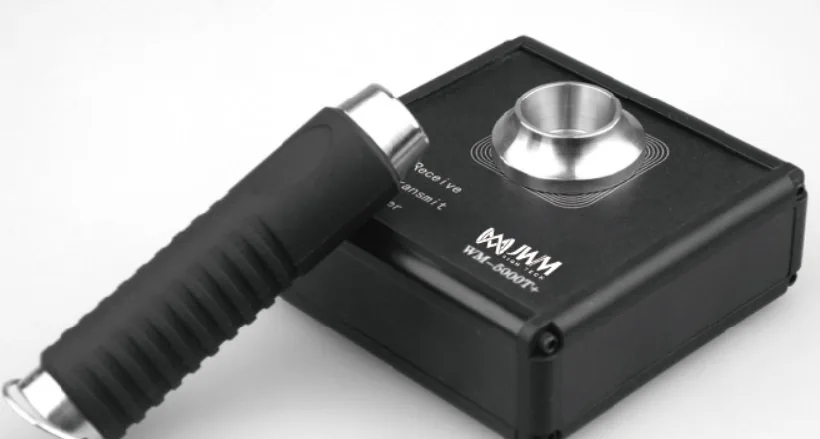
Contact (iButton) reading uses a fully sealed stainless-steel reader and battery-free checkpoint buttons carrying a unique, non-copyable code. There are no seams for disinfectant to pool in, no battery to replace inside a checkpoint, and no radio energy at the point of contact. That makes it the safer default for medical gas stores, oxygen cylinder rooms and any area where a spark risk has to be argued down.
RFID reading is faster and works without removing a glove or switching hands, which matters on long night rounds with a torch. Tags mount flush on a wall and are read at a short distance, so checkpoints behind equipment or above a door frame stay practical.
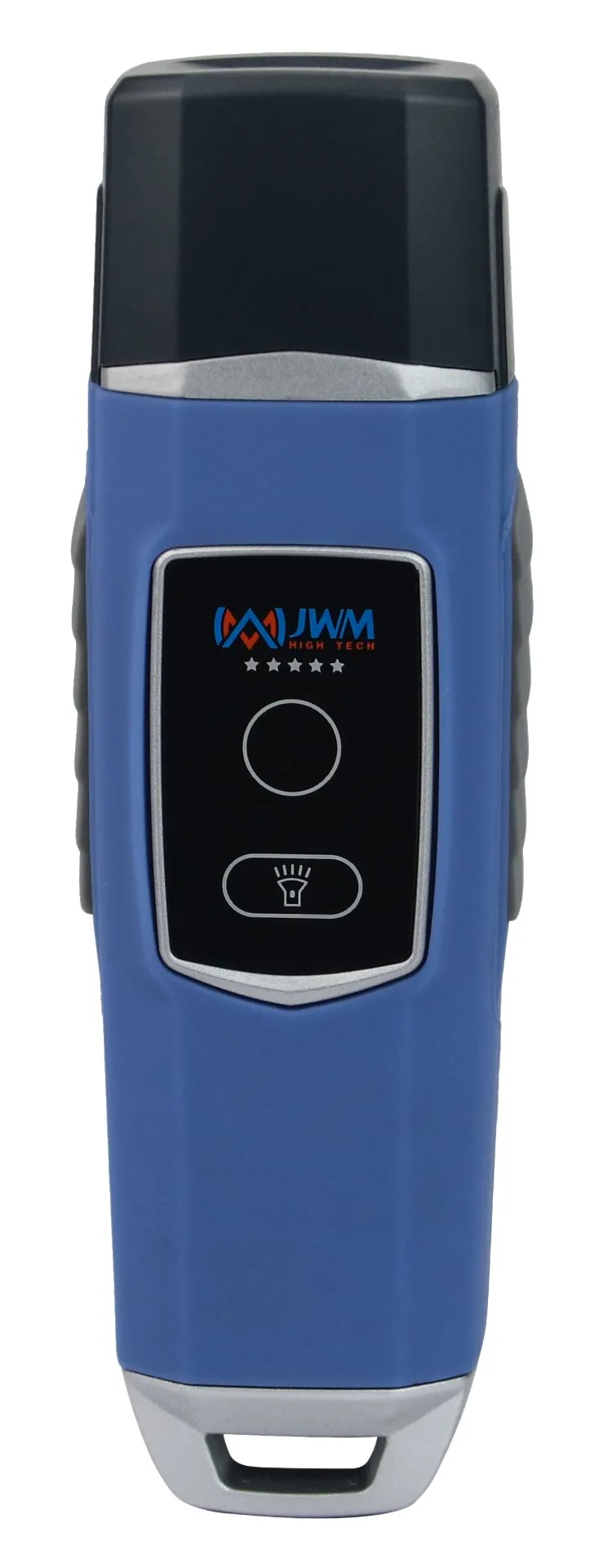
If both methods are needed, standardise on one reader family and select the reading method per zone: contact in gas and plant areas, RFID along long public corridors.
Hygiene, cleaning and the checkpoint itself
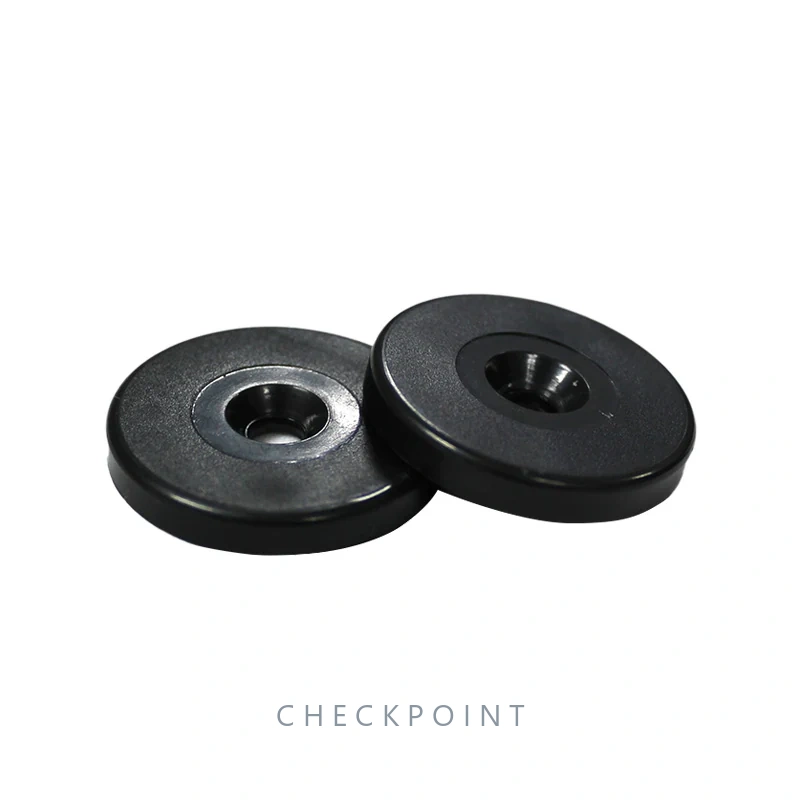
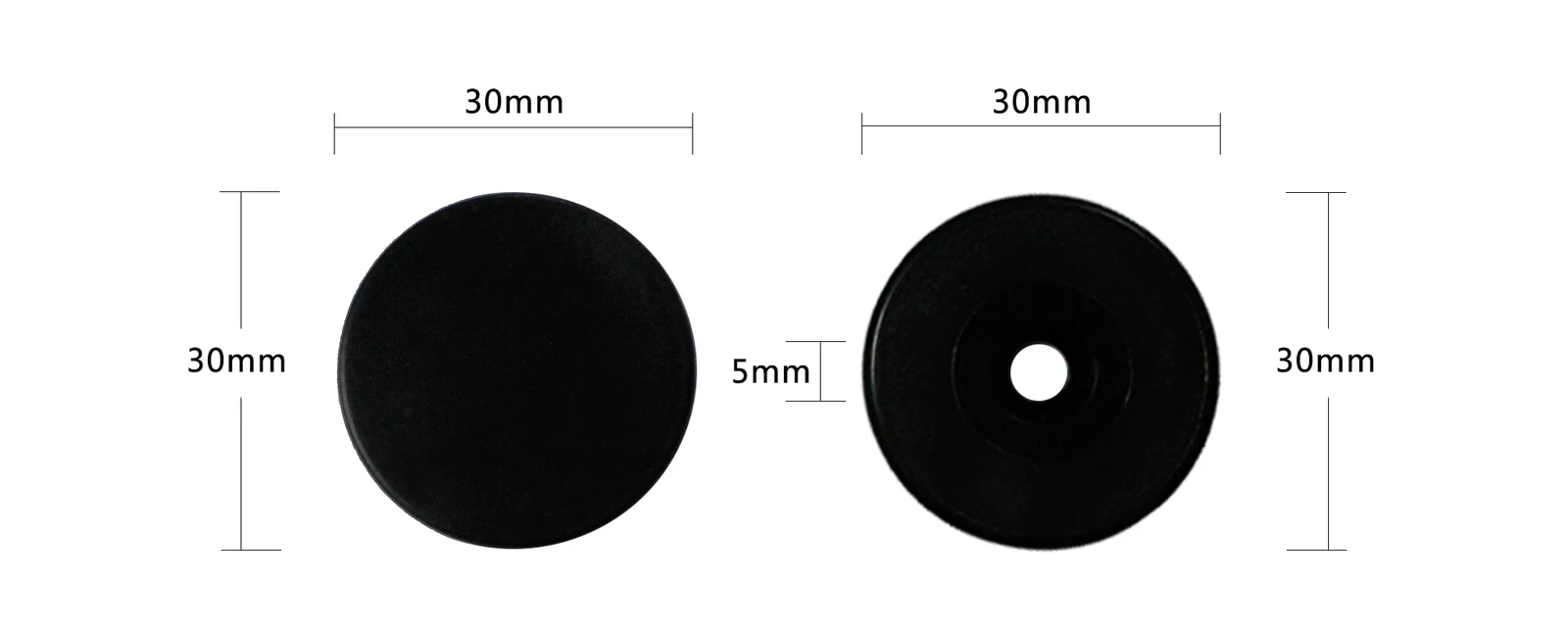
A checkpoint mounted at bed-head height on a ward wall will be wiped several times a day. That position calls for a sealed, passive checkpoint: an RFID tag in a solid moulded housing, read without contact, with no battery inside and no seam for disinfectant to pool in. Checkpoints in the 30A range are 30 mm discs, 5 mm thick, fixed with a single screw rather than an adhesive pad, which is what keeps them on the wall after a year of daily wiping. Whichever format you mount, fix it mechanically, avoid porous surfaces, and keep the reader housing clear of rubber seals that degrade under alcohol-based disinfectants.
Planning the rounds: zones, frequency and the night shift
Many hospitals work to a two-hour night round and a longer daytime round, but the zone split matters more than the interval. A practical split looks like this:
- Clinical zones: ward corridors, treatment rooms, sluice rooms and fire exits. Short routes, high frequency, strong emphasis on fire doors and obstruction;
- Restricted zones: pharmacy, controlled-drug store, medical gas manifold, records. Fewer checkpoints, but each one is an access confirmation;
- Plant zones: boiler house, chiller plant, UPS and switch rooms, roof plant. Daily rounds with readings noted, and often the first place a fault appears;
- Perimeter and car parks: gates, loading bays, waste compounds, staff parking. Night-heavy, and the area where lone-worker risk is highest.
Because the software schedules by time slot, route and person, one system covers all four. Seasonal changes, such as more heating checks in winter and more cooling checks in summer, are edited in the schedule instead of reprinted on paper.
From "the round was walked" to "this is what was found"
A tick confirms presence; an event code confirms action. Assign short numeric codes to the findings your team actually reports, such as fire door obstructed, extinguisher missing, water leak, equipment fault, unauthorised person or drug store alarm, and let the guard record the code at the checkpoint. The shift report then reads as a list of conditions found and closed, which is something a safety committee can act on.
Reporting for accreditation and insurance
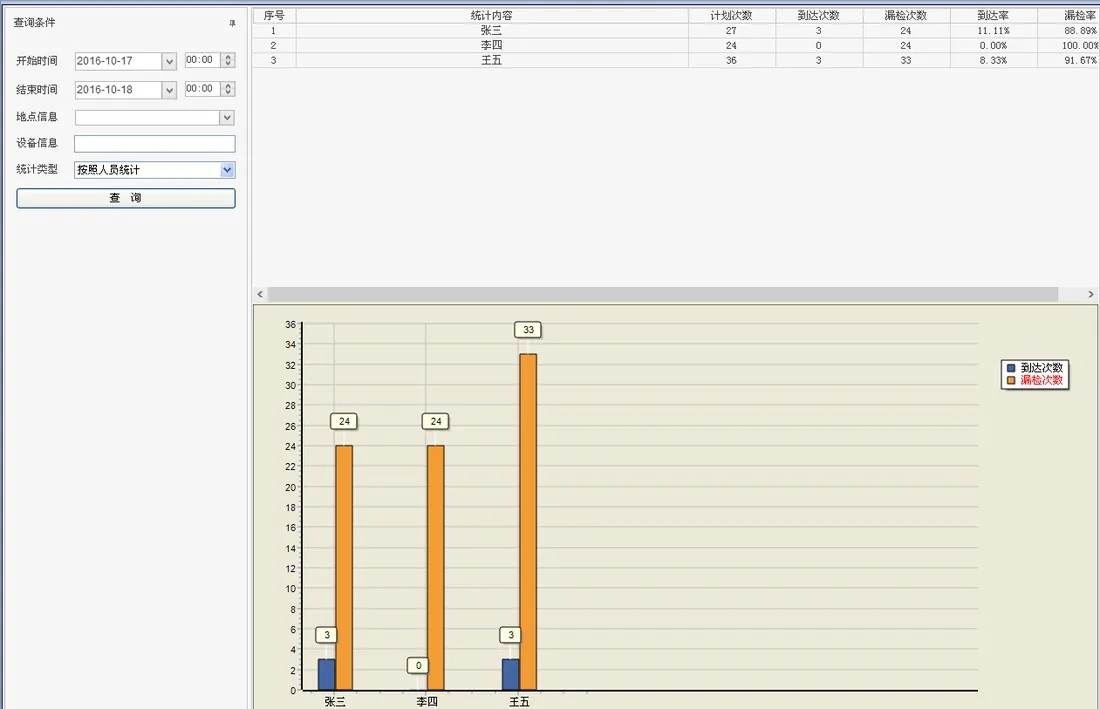
Reports export by date range, zone, route or guard, which is the format inspectors and insurers ask for. Because the underlying data cannot be edited after download, the export can be handed over as-is rather than re-typed into a summary. Retain records for the period your accreditation body requires; keeping a full year of rounds costs almost nothing in storage.
Rollout: what implementation actually involves
A hospital rollout is usually staged by zone rather than by building. Walk the routes with the security supervisor and the facilities engineer, mark each checkpoint, then mount buttons and sign plates. Guards need a single demonstration: touch the reader to the button, confirm the light or beep, move on. Offline systems need no network, no SIM cards and no server-room approval, which is often the difference between a two-week rollout and a six-month IT review. Online systems add real-time visibility but require connectivity and infrastructure sign-off.
Conclusion
Hospital patrol is judged after the fact, by people who were not there: an inspector, an insurer, a surveyor. A guard tour system is the cheapest way to make that judgement favourable, with every checkpoint, every hour and every round in a record that cannot be rewritten. If you are specifying patrol for a hospital, clinic or care facility, tell us the zones and the round frequency and we will map them to a reader and checkpoint configuration.